
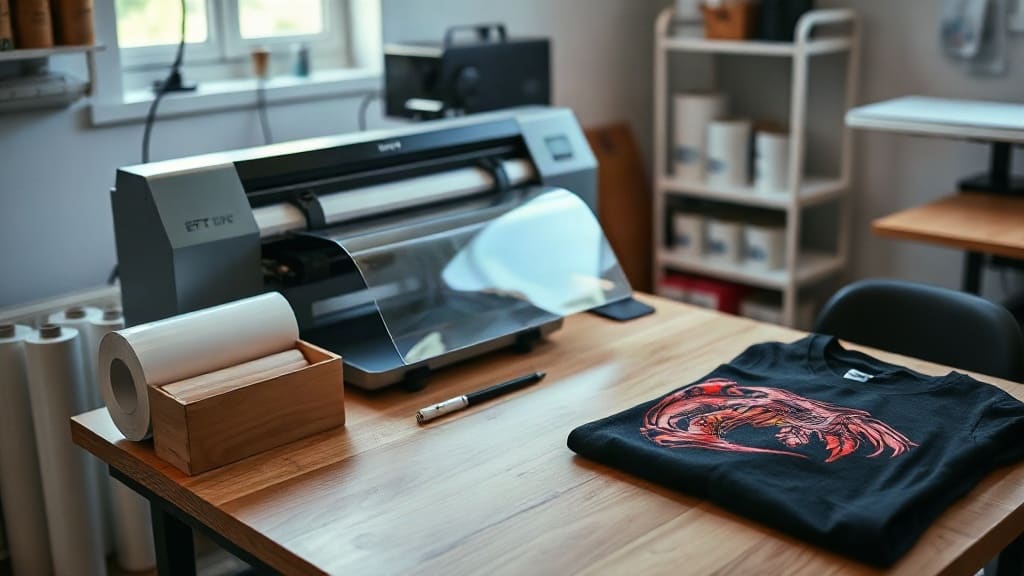
If you have ever waited weeks for a screen-printed order only to receive a cracked design, you already know why dtf printing has become a hot topic among small apparel brands. Direct-to-film printing sidesteps many of the old limitations of custom decoration. It lets you print full-color designs onto a special film, then heat-press them onto fabric. No screens, no minimums, no color-count restrictions. For print-on-demand sellers, that flexibility is a quiet revolution.
This guide walks through what dtf printing actually involves, where it shines, and how to avoid the mistakes that trip up beginners. You will find practical numbers, file preparation advice, and workflow tips drawn from real production environments.
What Exactly Is DTF Printing?
Direct-to-film is a digital printing method. A printer lays down a mirror-image design onto a PET film using water-based pigment inks. While the ink is still wet, a powdered hot-melt adhesive is sprinkled over it. After shaking off the excess, the film passes through a curing oven or heat press to melt the powder into a flexible glue layer. The result is a transfer that can be stored and applied later.
Application is simple: place the transfer on the garment, cover it with a heat press, and press at around 160°C (320°F) for 10 to 15 seconds. After cooling, you peel the film away. The design stays bonded to the fabric through a layer of adhesive that flexes with the material. Unlike vinyl, dtf transfers handle fine details, gradients, and photographic images without weeding.
How It Differs from DTG and Screen Printing
DTG (direct-to-garment) prints ink directly onto the fabric, which works best on 100% cotton and often needs pre-treatment. Screen printing requires a separate screen for each color and becomes expensive for short runs. dtf printing works on cotton, polyester, blends, and even nylon or leather. It has no color minimums and no pre-treatment. The trade-off is a slightly thicker hand feel, though modern films have reduced that considerably.
Why Print-on-Demand Sellers Are Turning to DTF
Print-on-demand is built on low risk and fast turnaround. Traditional decoration methods fight against that model. Screen printing demands bulk orders. DTG struggles with dark polyesters. Vinyl is slow to weed and limited in detail. dtf printing fills the gap.
- No minimum order quantity: print one or one hundred transfers with the same setup.
- Unlimited colors: full CMYK plus white ink in a single pass.
- Works on almost any fabric: cotton, poly, blends, canvas, and more.
- Transfers can be pre-printed and stored: press them when an order comes in.
- Low equipment cost compared to screen printing or DTG.
For a seller who wants to offer custom t-shirts, hoodies, tote bags, and even caps without holding inventory, this method is hard to beat. You can print a batch of transfers on Monday and apply them to garments as orders trickle in.
Setting Up Your DTF Workflow
1. Choose the Right Printer
You have two main paths. Converted desktop printers (like Epson EcoTank models with DTF ink) are affordable for hobbyists and small shops. Dedicated industrial DTF printers cost more but run faster and handle wider rolls. If you plan to sell regularly, a 24-inch or 60-inch roll printer will save hours of manual film handling.
2. Film and Powder Matter
Not all PET films are equal. Cheap films can curl, jam, or release poorly. Look for double-sided matte film designed for DTF. The adhesive powder comes in fine and coarse grades. Fine powder gives a softer feel and better detail; coarse powder provides stronger bond on rough fabrics. Many shops keep both on hand.
3. File Preparation
Your design should be prepared at 300 DPI in CMYK. Mirror the image horizontally before printing. Add a white underbase layer if your design has light colors that would otherwise disappear on dark garments. Most RIP software handles this automatically, but always check a test print. Transparent backgrounds are fine, but avoid semi-transparent pixels that can cause patchy adhesive.
4. Curing and Storage
After powdering, cure the film in an oven or with a heat press at 160°C for 2 to 3 minutes. Proper curing melts the powder into a smooth, clear layer. Under-cured transfers will crack or wash out. Store finished transfers flat in a cool, dry place. They keep for months if kept away from moisture and direct sunlight.
Cost Breakdown: What to Expect
Let us talk numbers. A 24-inch roll of DTF film costs roughly $0.50 to $1.00 per linear foot. Ink consumption varies, but a full-color A4 transfer uses about $0.30 to $0.80 in ink and powder. Add electricity and labor, and your cost per transfer lands between $1.00 and $2.50 for a typical front-chest design. Compare that to screen printing setup fees of $20 to $50 per color, and the savings for short runs become obvious.
On the selling side, custom t-shirts with a dtf transfer often retail for $25 to $40. Your margin depends on garment cost and your time. Many sellers batch-print transfers to reduce per-unit labor.
Common Mistakes and How to Avoid Them
Even experienced printers run into problems. Here are the ones I see most often.
- Not mirroring the image: The design must be flipped before printing, or it will read backwards on the garment.
- Under-powdering: Shake the powder gently and ensure even coverage. Too little powder means poor adhesion.
- Over-curing: Burning the film makes it brittle and yellow. Follow the temperature and time exactly.
- Pressing on the wrong side: Always press the film with the ink side facing up, then peel after cooling.
- Using too much pressure: Excessive pressure can spread the design and cause blurring. Medium pressure is usually enough.
Test on scrap fabric before running a full order. A small investment in test prints saves expensive reprints.
DTF vs. Other Print-on-Demand Methods
How does dtf stack up against the alternatives? DTG wins on hand feel for 100% cotton but struggles with poly and dark colors. Sublimation only works on light polyester and requires coated surfaces. Vinyl is durable but limited to simple shapes. Screen printing is cost-effective at high volumes but inflexible for one-offs.
DTF sits in the sweet spot: versatile, detailed, and accessible. It is not perfect. The hand feel is slightly thicker than DTG, and the process involves more steps than vinyl. But for a print-on-demand business that needs to say yes to almost any design on almost any fabric, it is a strong choice.
Getting Started Without Breaking the Bank
You do not need a full industrial setup to begin. A converted desktop printer, a heat press, film, powder, and a curing oven (or a second heat press) can get you running for under $2,000. Start with a few test designs on different fabrics. Learn your press settings. Once you are comfortable, you can scale up to a roll printer and automated powder shaker.
Many successful sellers start by offering dtf transfers as a service to other crafters before printing their own garments. That builds cash flow and sharpens your skills.
Frequently Asked Questions
How long do DTF prints last?
With proper curing and application, a dtf print can withstand 50 or more home wash cycles without significant fading or cracking. Turn the garment inside out and wash in cold water to extend its life.
Can I use DTF on 100% polyester?
Yes. DTF adheres well to polyester and polyester blends. For very stretchy or coated polyesters, test a small area first. The adhesive layer flexes with the fabric, so cracking is minimal.
Do I need a special printer for DTF?
You can convert a standard Epson or Ricoh printer with DTF ink and a RIP software. Dedicated DTF printers are also available. The key is using pigment inks designed for DTF and a film that accepts them.
How do I store unused DTF transfers?
Keep them flat, dry, and out of direct sunlight. A cool room or a sealed bag works well. Avoid folding them, as creases can affect the final print.
Is DTF printing safe for home use?
With basic precautions, yes. Use in a ventilated area, wear a mask when handling powder, and follow the manufacturer's safety guidelines. The inks are water-based, but the powder can be an irritant if inhaled.
DTF printing has lowered the barrier to entry for custom apparel. Whether you are a solo creator or a growing brand, it offers a practical path to high-quality, full-color designs without the old constraints. Start small, test often, and let the flexibility work for you.