
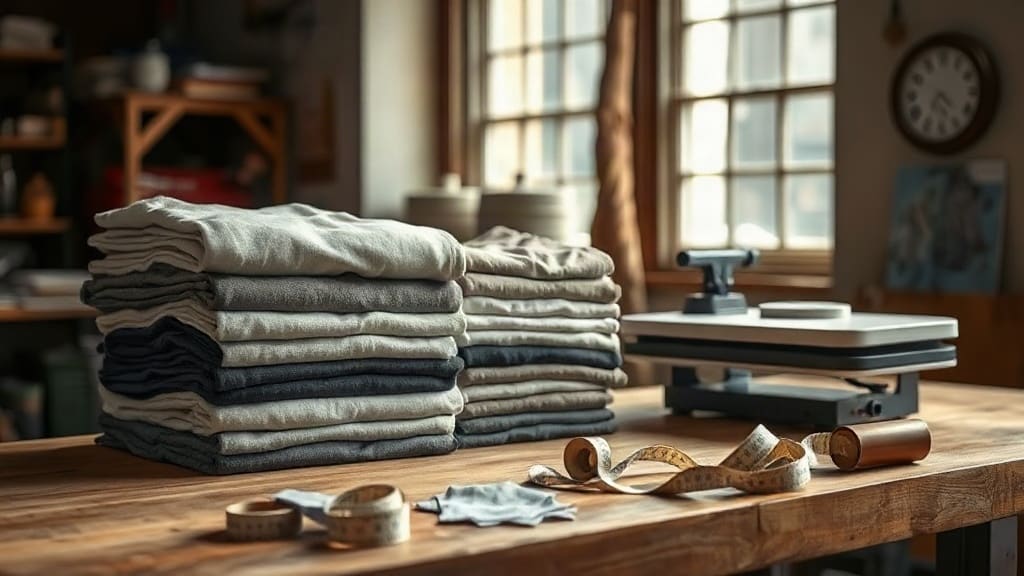
Walk into any print shop that has been around for a decade and you will notice something on the shelves: fewer random boxes, more intentional picks. Decorators who once bought whatever was cheapest now ask a different question before ordering. They want to know how a garment behaves before it is printed, not after a customer complains. That shift is exactly why smart blanks have moved from a niche term to a daily consideration in custom apparel work.
The idea is simple. A smart blank is a base garment chosen not just for price or color, but for how it performs through the entire decoration process: how it takes ink, how it holds shape after washing, how it feels against skin, and how reliably it can be reordered months later. Get that foundation right and everything downstream, from pressing to packaging, gets easier.
What Actually Makes a Blank Garment Smart
There is no official certification that stamps a shirt as smart. The label is earned through practical performance. In my own runs, the difference between a frustrating job and a smooth one almost always traces back to the blank itself, not the artwork.
A garment earns the smart label when it checks several boxes at once:
- Fabric consistency: The same style ordered twice should feel and measure the same, so your press settings and sizing charts stay valid.
- Stitch density: Dense, even stitching at shoulders, hems, and side seams resists distortion during heat pressing.
- Color stability: Dyes that do not bleed or shift when heat is applied, which matters enormously for bright or dark tones.
- Weight that suits the job: A 5.5 oz ring-spun tee behaves differently from a 6.5 oz heavyweight, and neither is wrong. The mistake is mismatching weight to use case.
- Reliable restock: A blank you cannot reorder in six months is a liability for anyone printing team shirts or recurring merch.
Notice that price is not on that list. Price matters, but a cheap blank that fails after two washes costs more in remakes and reputation than a slightly pricier one that holds up. That math is the heart of the smart blanks philosophy.
Why the Base Garment Decides Your Final Quality
Decorators sometimes treat the blank as a neutral canvas. It is not neutral. It is an active participant in the finished product, and it influences adhesion, texture, and longevity in ways that are easy to underestimate.
Surface and weave affect every transfer
When you press a transfer onto a tightly knit, ring-spun surface, the adhesive grips evenly and the design sits flush. On a loose, low-quality knit, the same transfer can bridge the gaps between fibers, creating a cracked or bubbly finish over time. The transfer did not fail. The surface let it down.
Weight changes the entire feel of a design
A heavy design on a lightweight tee can drag the fabric and distort the neckline. The same design on a midweight or heavyweight body sits naturally. Choosing weight with intent, rather than defaulting to whatever is in stock, is one of the fastest ways to raise perceived quality.
Color choice interacts with decoration method
Dark garments often need a white underbase for bright inks or transfers. That extra layer adds thickness and can stiffen the print area. Smart blank selection anticipates this and favors fabrics that handle the added layers gracefully.
Where Shaka Wear Fits Into a Smart Blanks Strategy
Among the brands that decorators return to, Shaka Wear has built a reputation for delivering heavyweight, streetwear-leaning garments that hold their structure. That structure is not just about looks. A sturdy body resists the pulling and stretching that happens when a transfer is applied and cooled.
In practice, Shaka Wear blanks tend to work well for:
- Oversized and boxy silhouettes where drape matters
- Heavyweight tees and fleece that need to keep their shape after pressing
- Streetwear and skate-inspired lines where a substantial hand feel is part of the appeal
- Repeat orders, because consistent sizing keeps your size charts honest
The trade-off is that heavier garments can demand slightly different press settings. More mass means more heat absorption, so dwell time and pressure often need small adjustments. Once dialed in, though, the results are stable and repeatable, which is exactly what a smart blanks approach is meant to deliver.
Pairing Smart Blanks With DTF Transfers
Direct-to-film has become a go-to decoration method for small and mid-sized runs, and its strengths line up neatly with well-chosen blanks. DTF transfers handle fine detail, gradients, and multi-color artwork without the setup costs of screen printing, which makes them ideal for short runs, samples, and on-demand orders.
But DTF transfers are only as good as the surface they land on. Here is how to get the most from the combination:
- Match film to fabric color. Use a white underbase for dark garments and a thinner film for light ones to avoid a heavy hand feel.
- Pre-press to remove moisture. Even a short pre-press drives out dampness that can trap bubbles under the transfer.
- Control pressure evenly. Uneven pressure is the most common cause of partial adhesion, especially near seams and collars.
- Peel at the right temperature. Follow the film manufacturer's hot or cold peel guidance rather than guessing.
- Wash inside out, cold, and air dry. This single habit extends the life of any transfer dramatically.
When the blank is dense and consistent and the transfer is applied with care, the finished piece feels like a garment that was made that way, not a shirt that had something stuck onto it.
Building a Smart Blanks Lineup for Your Shop
You do not need dozens of styles to run a smart operation. Most successful decorators I know keep a tight, deliberate core and add only when a real need appears. A workable starting lineup might include a midweight ring-spun tee for everyday prints, a heavyweight option like a Shaka Wear body for premium and streetwear work, a light-colored style for bright DTF transfers, and a dark style for high-contrast designs.
From there, the discipline is in the details. Track which blanks survive the most washes in your own test runs. Note which ones press cleanly the first time. Over a few months, those notes become a purchasing guide that is more valuable than any generic recommendation list, because it reflects your equipment, your climate, and your customers.
Common Mistakes That Undo Good Blanks
Even a great garment can be ruined by small oversights. Watch for these:
- Storing blanks in humid rooms, which introduces moisture that causes bubbling during pressing
- Mixing fabric weights in a single order, which complicates press settings and sizing
- Assuming all cotton is equal, when combed, ring-spun, and open-end fabrics behave very differently
- Skipping test presses on a new blank before committing to a full run
- Ignoring shrinkage rates, which can throw off sizing on larger orders
None of these are dramatic problems on their own. Together, they are the difference between a shop known for quality and one known for reprints.
Frequently Asked Questions
What does the term smart blanks actually mean?
It refers to base garments selected for performance rather than price alone. A smart blank takes decoration well, holds its shape through washing, and can be reordered consistently, which reduces waste and rework in custom apparel production.
Are Shaka Wear blanks good for DTF transfers?
Yes, their heavier fabric and dense construction generally press well once settings are adjusted for the extra mass. Preheat thoroughly and test a sample first, since heavyweight bodies can absorb heat differently than lighter tees.
How long do DTF transfers last on quality blanks?
With proper application and care, DTF transfers commonly last through many wash cycles. Washing inside out in cold water and avoiding high dryer heat are the two habits that most extend their life.
Do I need different press settings for different blanks?
Often yes. Fabric weight, blend, and moisture content all affect how heat and pressure transfer through the garment. Keeping simple notes for each style saves time and prevents inconsistent results.
Is it worth paying more for better blanks?
For most decorators, yes. The cost of a remake, a refund, or a lost repeat customer usually outweighs the small per-unit difference, especially on orders where quality is visible and the garment gets worn often.