
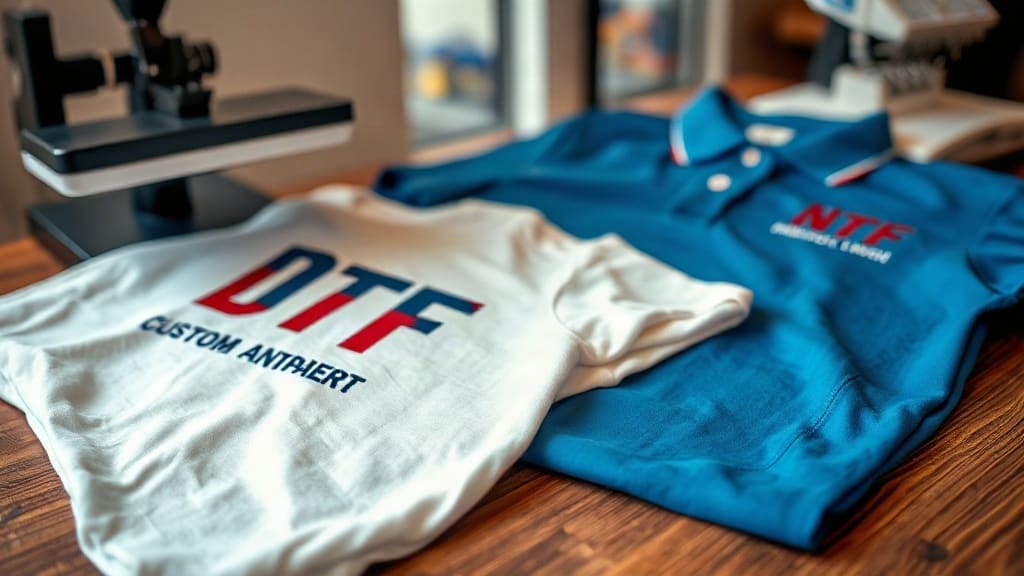
When you're planning custom apparel, whether for a team, business, or event, the decision often comes down to two popular decoration methods: DTF transfers and embroidery. Both can make your garments look professional, but they cater to different needs. In this guide, we'll break down the key differences so you can choose the best option for your project.
What Are DTF Transfers?
DTF transfers (Direct to Film) are a digital printing method where your design is printed onto a special film, coated with adhesive powder, and then heat-pressed onto fabric. This technique has gained massive popularity because it works on almost any fabric, including cotton, polyester, blends, and even nylon. It's ideal for detailed, multi-color designs without the setup costs of screen printing.
How DTF Transfers Work
The process is straightforward: your artwork is printed onto a PET film using specialized inks, then a thermoplastic powder is applied while the ink is still wet. After curing, the transfer is ready to be applied with a heat press. The result is a vibrant, durable print that stretches with the fabric.
What Is Embroidery?
Embroidery is one of the oldest and most respected decoration methods. It involves stitching threads directly into the fabric to create a design. This gives a raised, textured look that's often associated with premium quality. Embroidery is commonly used for logos, monograms, and text on polos, caps, jackets, and bags.
How Embroidery Works
Digitizing software converts your logo into a stitch file, which tells the embroidery machine where to place each stitch. The machine then sews the design onto the garment. The number of stitches and thread colors affects the cost and production time.
Key Differences Between DTF Transfers and Embroidery
Let's compare these methods across several important factors.
Durability and Washability
DTF transfers are known for their durability. When applied correctly, they can withstand dozens of washes without fading or cracking. However, they may peel if the heat press settings are off or if the garment is washed in hot water. Embroidery, on the other hand, is extremely durable. The threads are stitched into the fabric, so they won't peel or crack. It can last the lifetime of the garment, though the fabric itself may wear out first.
Design Complexity and Detail
DTF transfers excel with complex, multi-color designs. They can reproduce gradients, photographs, and fine details with ease. There's no limit on colors, and you don't pay extra for additional colors. Embroidery is better for simpler designs with solid colors and bold lines. Very fine details, small text, and gradients can be challenging to embroider; they may require simplification or may not translate well.
Cost Considerations
For small orders, DTF transfers are often more affordable because there are no setup fees or minimums. You can print one-off designs without breaking the bank. Embroidery typically involves a one-time digitizing fee (usually $20-$50) and may have minimum order quantities. However, for large orders, embroidery can be cost-effective on a per-piece basis, especially for simple designs. DTF transfers have a lower cost per piece for multi-color designs, as there's no extra charge for additional colors.
Fabric Compatibility
DTF transfers work on a wide range of fabrics, including cotton, polyester, blends, and even treated nylon. They are not ideal for fabrics with a heavy texture or coatings that prevent adhesion. Embroidery works best on stable, woven fabrics like cotton, canvas, and denim. It can be done on knits, but may distort stretchy fabrics unless stabilizers are used. Delicate fabrics like silk or thin synthetics may not support embroidery.
Feel and Appearance
DTF transfers produce a smooth, printed feel on the fabric. They can be soft to the touch, especially with modern inks, but there is a slight plastic-like layer. Embroidery gives a raised, textured, and premium look. It's often perceived as higher quality, which is why it's favored for corporate apparel and uniforms.
Production Time
DTF transfers are fast to produce once the design is ready. Printing and pressing can be done in minutes per item. Embroidery requires digitizing and then stitching, which can take longer, especially for complex designs. However, once the file is set, production is consistent.
When to Choose DTF Transfers
Opt for DTF transfers when:
- Your design has many colors, gradients, or photographic elements.
- You need a small batch or one-off items without setup fees.
- You're decorating polyester, blends, or unusual fabrics.
- You want a smooth print feel and vibrant colors.
- You have a tight deadline and need quick turnaround.
When to Choose Embroidery
Choose embroidery when:
- You want a premium, textured look that lasts.
- Your design is simple with solid colors and bold lines.
- You're decorating polos, caps, jackets, or bags.
- You need a professional, corporate appearance.
- You have a larger order and want a classic, durable finish.
Hybrid Approaches
You don't always have to pick one. Some projects combine both methods. For example, a left-chest logo embroidered on a polo, with a large DTF transfer on the back. This leverages the strengths of each: embroidery for a premium logo, DTF for a detailed back print. Just ensure the design elements complement each other.
Practical Tips for Best Results
Whichever method you choose, follow these tips:
- Always test on a scrap garment before full production.
- For DTF transfers, use a heat press with consistent temperature and pressure. Follow the transfer supplier's instructions.
- For embroidery, invest in good digitizing. A poorly digitized file can ruin the look.
- Wash garments inside out and avoid harsh chemicals to prolong life.
- Store unused DTF transfers in a cool, dry place.
Frequently Asked Questions
Can DTF transfers be applied to 100% polyester?
Yes, DTF transfers work well on polyester. However, polyester can be heat-sensitive, so use a lower temperature (around 280-300°F) and test first to avoid scorching or dye migration.
Is embroidery more expensive than DTF transfers?
It depends on the order size and design. For small orders with complex designs, DTF transfers are usually cheaper. For large orders with simple designs, embroidery can be more cost-effective per piece after the initial digitizing fee.
How long do DTF transfers last?
With proper application and care, DTF transfers can last 50+ washes. They may outlast the garment itself if washed inside out in cold water and tumble dried low.
Can I embroider on a t-shirt?
Yes, but t-shirts are knits and can stretch. Use a cut-away stabilizer and consider a design that isn't too dense. For very stretchy shirts, DTF transfers might be a better choice.
Which method is better for a small business?
If you offer custom apparel with varied designs, DTF transfers give you flexibility without minimums. If you focus on corporate uniforms or premium items, embroidery can set you apart. Many small businesses offer both to meet diverse customer needs.
Ultimately, the choice between DTF transfers and embroidery depends on your specific project. Consider your design, fabric, budget, and desired look. Both methods have their place, and understanding their differences ensures you make the right call for your custom apparel.