
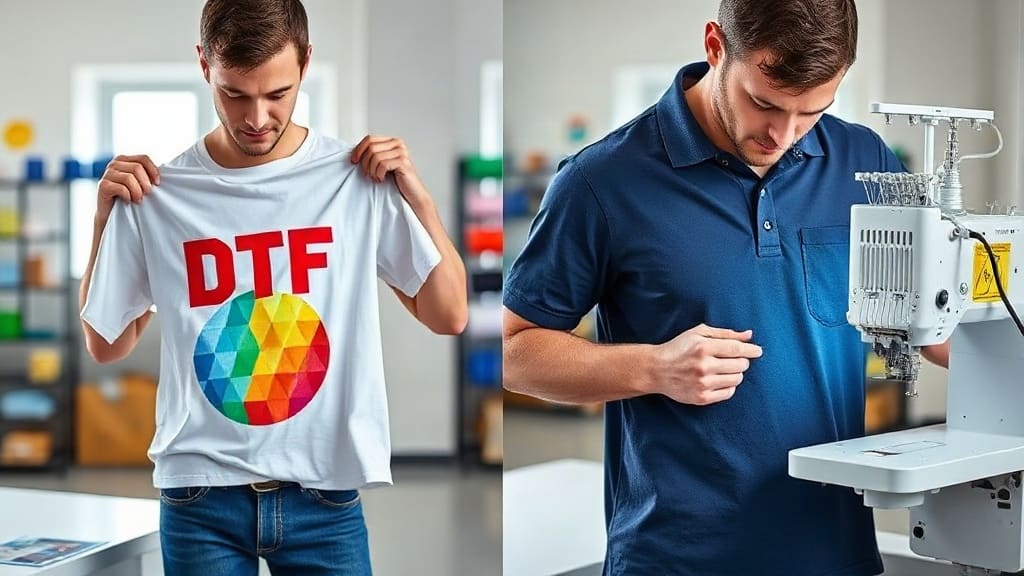
Choosing between DTF transfers and embroidery for custom apparel can feel like a coin toss if you have not worked with both. Each method has a distinct set of strengths that only become obvious once you consider your design, fabric, budget, and timeline. As someone who has spent years producing decorated garments for teams, small businesses, and events, I have seen plenty of projects succeed and fail based on this single decision. This guide breaks down the practical differences so you can order with confidence.
What Are DTF Transfers?
Direct-to-film, or DTF, is a printing method where your design is printed onto a special film using pigment inks, coated with a hot-melt adhesive powder, and then heat-pressed onto the fabric. The result is a vibrant, full-color transfer that bonds to the material without needing a cutting or weeding step. Because the design is printed digitally, DTF transfers can reproduce photographs, gradients, and fine details that traditional screen printing or embroidery cannot easily match.
One of the biggest advantages of DTF is its compatibility with a wide range of fabrics, including cotton, polyester, blends, and even some synthetic materials that embroidery might damage. The process also allows for very small text and complex artwork, making it a go-to for small-batch orders, personalized gifts, and designs that push creative boundaries.
How DTF Transfers Are Produced
The workflow is straightforward: your artwork is printed onto a PET film, powdered with adhesive, and then cured. When you are ready to apply it, you place the transfer on the garment and press it with a heat press at a specific temperature and pressure for a set time. After pressing, you peel the film away (hot or cold peel, depending on the film type) to reveal the design. The entire process can be done in-house with a DTF printer and a heat press, giving you control over turnaround.
What Is Embroidery?
Embroidery is the art of stitching thread directly into fabric to create a design. It is one of the oldest decoration methods and still one of the most durable. A digitized file tells the embroidery machine where to place each stitch, and the result is a textured, three-dimensional look that feels premium and holds up to repeated washing. Embroidery is especially popular for corporate logos, uniforms, hats, and any garment that needs a professional, long-lasting finish.
Unlike DTF, embroidery cannot reproduce fine gradients or very small text (below a certain point size, letters become unreadable). It also works best on stable fabrics like cotton, canvas, and fleece. Stretchy or delicate materials may pucker or distort under the needle, which is why many decorators recommend DTF for those cases.
When Embroidery Shines
If your design is a logo with solid shapes, bold lines, and a limited color palette, embroidery will look sharp and withstand years of wear. It also adds a tactile quality that customers associate with quality. For polos, caps, jackets, and bags, embroidery is often the expected standard.
DTF Transfers vs. Embroidery: A Side-by-Side Comparison
To make the choice easier, here is how the two methods stack up on the factors that matter most.
Design Complexity and Color
DTF transfers win hands down for complex artwork. You can print unlimited colors, gradients, and photographic images without extra cost. Embroidery, on the other hand, requires each color to be a separate thread, and blending colors is limited. Fine details like small text or thin lines may need to be simplified or enlarged to stitch cleanly.
Cost
For small orders, DTF is often more economical because there are no setup fees like digitizing (which can cost $20 to $100+ per design) and no minimums. However, for large orders of simple designs, embroidery can become cost-effective because the thread and machine time are relatively cheap once the digitized file exists. DTF transfers have a per-piece material cost that stays consistent regardless of quantity.
Durability and Washability
Both methods are durable when applied correctly. Embroidery will outlast the garment itself in most cases. DTF transfers, if pressed properly and cared for (washing inside out, avoiding high heat), can last 50+ washes. Cheap DTF transfers from low-quality suppliers may crack or fade, so sourcing matters.
Production Speed
DTF can be incredibly fast: print, powder, press, and you are done. No digitizing, no minimums, no waiting for a machine to stitch. Embroidery requires digitizing and then stitching time, which can be slower for large orders. However, once a file is digitized, reorders are quick.
Fabric Compatibility
DTF adheres to cotton, polyester, blends, nylon, and more. Embroidery works best on woven fabrics that can support stitching without distortion. Stretchy knits, lightweight synthetics, and waterproof materials are usually better with DTF.
How to Choose the Right Method for Your Project
Start by asking these questions:
- What is your design? If it has many colors, gradients, or fine details, go with DTF transfers. If it is a simple logo with solid colors, embroidery is a classic choice.
- What fabric are you decorating? Check compatibility. DTF is more forgiving.
- What is your budget and quantity? Small runs and one-offs favor DTF. Large runs of simple logos may favor embroidery.
- How long does it need to last? Both are durable, but embroidery has the edge for extreme longevity.
- What is your timeline? DTF can be same-day; embroidery usually takes longer due to digitizing and stitching.
In my own shop, I keep both options available because no single method fits every job. For a recent customer who wanted a full-color photo on a polyester performance shirt, DTF was the only viable choice. For a local brewery that needed 200 logo caps, embroidery delivered the professional look they wanted.
Common Mistakes to Avoid with DTF Transfers
Even though DTF is user-friendly, a few missteps can ruin the result. Pressing at the wrong temperature or pressure can cause the transfer to peel or not adhere fully. Always follow the film manufacturer's instructions and test on a scrap piece first. Also, avoid stretching the garment immediately after pressing; let it cool completely. Finally, invest in a quality heat press with consistent pressure; a cheap press can lead to uneven results.
Frequently Asked Questions
Can DTF transfers be used on dark colors?
Yes, DTF transfers include a white ink layer that makes them opaque on dark fabrics. The design will show up vibrantly without needing a separate white underbase.
How long do DTF transfers last?
With proper application and care, DTF transfers can last as long as the garment. Expect at least 50 washes if you wash inside out in cold water and avoid high heat in the dryer.
Is embroidery more expensive than DTF?
It depends on quantity and design. For small orders, DTF is often cheaper because there is no digitizing fee. For large orders of simple logos, embroidery can be more cost-effective per piece.
Can I put DTF transfers on hats?
DTF on hats is possible but tricky due to the curved surface. Embroidery is generally the better choice for caps because it handles the shape and texture well.
Do I need special equipment for DTF transfers?
You need a DTF printer, adhesive powder, and a heat press. Some suppliers sell pre-printed transfers that you can apply with just a heat press, which is a great option if you do not want to print in-house.
Ultimately, the best method is the one that matches your design, fabric, and budget. If you are still unsure, order a sample of each and compare. Many decorators offer both, so you can test before committing to a large run. With the right choice, your custom apparel will look great and last.