
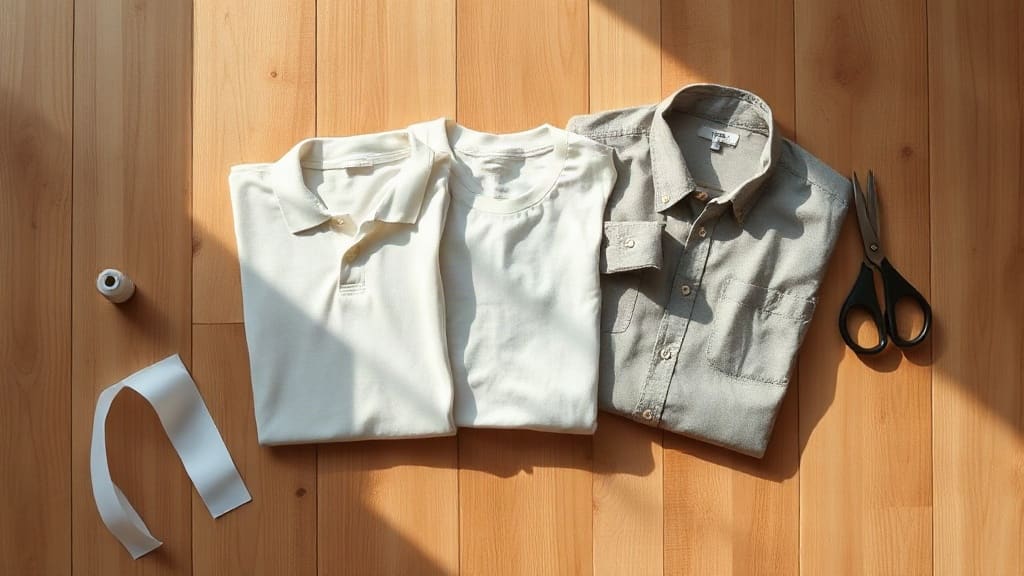
Anyone who has run a single embroidery job knows the sinking feeling of a design that looked crisp on screen but puckered, sagged, or distorted once it hit the needle. Nine times out of ten the file is not the problem. The garment is. Choosing smart blanks is the quiet skill that separates embroiderers who fight every order from those whose work looks clean on the first pass.
This guide walks through what actually matters when you buy blank apparel for decoration: fiber content, weave, weight, backing, and the small construction details that decide whether a 9,000 stitch logo sits flat or pulls the fabric into a wrinkled mess.
What Makes a Blank "Smart" for Embroidery
A smart blank is not simply a cheap shirt. It is a garment whose construction works with the needle instead of against it. That means stable fabric, a tight enough weave to hold small lettering, and a cut that keeps the embroidery area flat when worn.
Three variables drive almost every outcome:
- Fabric stability. Loosely woven or highly elastic fabrics move under the needle, which causes puckering and misaligned fills.
- Weight and density. Heavier fabric supports more stitches without distorting; very light fabric needs a lighter design.
- Backing compatibility. Some fabrics accept cutaway stabilizer cleanly. Others need a different approach entirely.
Get those three right and most of the common embroidery problems disappear before the machine even starts.
Fabric Types Ranked by Embroidery Friendliness
Woven Cotton and Cotton Blends
Poplin, twill, canvas, and mid-weight cotton blends are the safest starting point. The weave is tight, the surface is stable, and cutaway backing adheres well. Corporate button-downs, work shirts, and structured polos usually fall here. If you are new to a fabric, test a dense fill on a scrap before committing to a full run.
Pique and Jersey Knit Polos
Pique knits are the workhorse of logo apparel. The slightly textured surface hides minor stitch irregularities, and the fabric has enough body to support left-chest logos and back-yoke designs. Jersey knits, by contrast, are thinner and stretchier, so keep stitch counts moderate and use a cutaway stabilizer rather than tearaway.
Performance and Synthetic Fabrics
Polyester performance wear, moisture-wicking knits, and stretch blends introduce heat sensitivity. High stitch counts can perforate the fabric and create holes that never close. Use a sharp needle, reduce density, and consider a water-soluble topping to stop stitches from sinking into the pile.
Fleece, Terry, and Heavyweight Outerwear
These are forgiving in one sense and demanding in another. The thickness supports dense embroidery, but pile fabrics need topping to keep stitches from disappearing. A medium cutaway backing and a slightly larger design scale give the cleanest result.
Reading a Blank's Spec Sheet Like a Buyer
Wholesale catalogs throw a lot of numbers at you. Most of them matter less than the three below.
- Fabric weight in ounces or grams. For knits, anything under about 4.5 oz tends to be fragile under dense embroidery. Mid-weight (5.5 to 6.5 oz) is the sweet spot for logos.
- Fiber content percentage. A 60/40 cotton-poly blend behaves very differently from 100% cotton or 100% polyester. Blends generally hold shape better after washing.
- Construction details. Double-needle stitching, taped neck seams, and side seams all signal a garment built to survive decoration and repeated laundering.
If a supplier cannot tell you the fabric weight or fiber blend, that is your answer about whether the blank is worth testing.
Matching Design Density to the Garment
Stitch count is not a bragging right. A 15,000 stitch left-chest logo on a lightweight tri-blend tee will pull the fabric no matter how skilled the operator is. Scale the design to the fabric.
As a working rule, lightweight knits handle dense fills poorly and small text well, provided you use a sharp needle and light backing. Heavier wovens and fleece can absorb dense fills and layered elements without complaint. When in doubt, digitize two versions of the same logo at different densities and run both on scrap fabric before quoting the job.
This is an area where smart blanks selection pays for itself. Buying a slightly heavier blank often costs less than reworking a ruined order.
Common Mistakes Buyers Make
A few patterns show up again and again in shops that struggle with quality.
- Choosing blanks purely on price, then compensating with extra backing and slower speeds.
- Using the same stabilizer for every fabric instead of matching backing to material.
- Ignoring shrinkage. Untested cotton blanks can shrink enough after the first wash to distort the embroidery area.
- Buying one sample, approving it, and ordering a full run from a different dye lot or mill.
Samples matter, but so does consistency. Once you find a blank that works, treat it as a specification, not a suggestion.
Building a Reliable Blank Library
The most efficient approach for a shop of any size is to standardize. Pick two or three blanks per category: a lightweight tee, a mid-weight polo, and a structured woven or fleece. Test each with your most common logo sizes, record the stitch counts and backing that worked, and keep those notes with the product listing.
Over time this library becomes your real competitive advantage. You stop guessing, quotes get faster, and customers get consistent results whether they order ten pieces or a thousand. That consistency is what turns a one-time buyer into a repeat account, and it starts with the blank you choose before the first stitch.
Frequently Asked Questions
What is the best fabric weight for embroidered logos?
For knit polos and tees, aim for 5.5 to 6.5 ounces. That range supports left-chest and back-yoke logos without puckering. Lighter knits can work but need reduced stitch density and cutaway backing.
Do I need cutaway or tearaway stabilizer on a polo?
Cutaway is the safer default on pique and jersey knits because it stays in place through washing. Tearaway is fine on stable wovens where you want a softer hand, but it offers less support for stretchy fabric.
Can you embroider on 100% polyester performance shirts?
Yes, but with adjustments. Use a sharp needle, lower the stitch density, and add water-soluble topping to prevent stitches from sinking. Avoid very dense fills that can perforate the fabric.
How do I stop embroidery from puckering on thin t-shirts?
Puckering usually comes from too many stitches on unstable fabric. Reduce density, switch to cutaway backing, and consider a lighter design. Testing on scrap before production saves far more time than fixing finished garments.
Should I always buy the heaviest blank available?
No. Heavier fabric is not automatically better. Match the blank to the design and the end use. A structured woven shirt suits a dense logo, while a lightweight tee suits a simple one-color mark.